
When to Move from Freelancers to a Shopify Agency
Established brands rarely outgrow their freelancers on quality. They outgrow the arrangement around the work: continuity, review, access and who tracks platform change.

Established brands rarely outgrow their freelancers on quality. They outgrow the arrangement around the work: continuity, review, access and who tracks platform change.
Vendors deliver the brief; a growth partner owns the question of what the store should work on next. Five differences that show up in practice, when each arrangement is the right one, and how to test a supplier before signing a longer agreement.
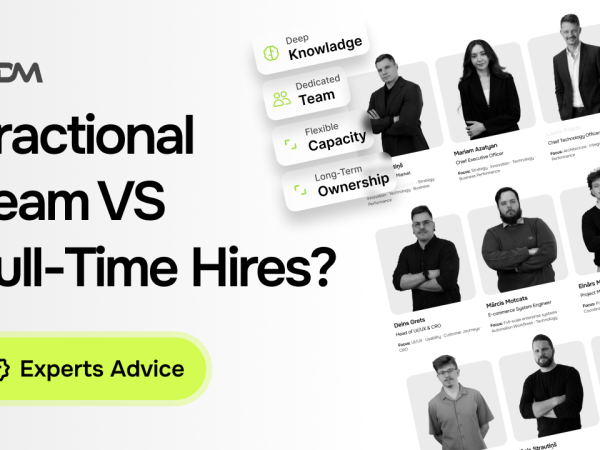
A fractional ecommerce team suits businesses that need several senior skills in bursts rather than continuously. This guide sets out which roles fractionalise well, how small the fraction can get before it stops working, and how the engagement should be structured.

A marketing agency is engaged to bring people to the store and generally does not build or maintain it. This guide compares four partner types, the responsibilities each accepts, and how to add store-side ownership without replacing the marketing relationship.
Outsourcing decisions usually go wrong when they are taken function by function. Splitting each function into the judgment it carries and the execution it generates gives a clearer answer, and a more durable arrangement.
Budget for four ecommerce specialists rarely arrives at once, so the real decision is which capability comes first and who covers the rest. A comparison of four internal hires, one external team and the hybrid arrangement, with the utilisation, continuity and ownership factors that decide it.
Repeat purchase rate rarely moves because of a missing tactic. It moves when the measurement is honest, the reorder path is short, and the timing matches the category’s own buying cycle.
GA4 and your order table will never agree exactly. A reliable ecommerce analytics setup is one whose variance against the backend is small, explained and stable, and this guide covers how to build and validate that.
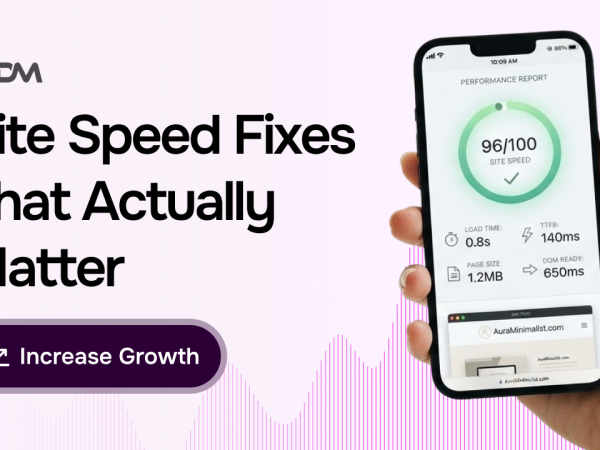
Fast stores convert better, but that is a correlation, not a promise that this store will earn more by loading faster. This guide separates the evidence from the sales pitch, shows which thresholds and data sources actually describe shoppers, and sets out which speed fixes repay the work and which rarely do.

Personalization pays where a store produces enough behavioural data and presents enough choice for it to matter. This guide sets out which types repay the cost at realistic volumes, which are usually overkill, and how to test the difference before committing budget.